"A DZIŚ ŻEM SE CZYTŁA/LUKŁA..."

CZYTAJ ZA DARMO!

Statystyki

SZUKAŁKA

Pokazywanie postów oznaczonych etykietą czytamy w oryginale. Pokaż wszystkie posty
WE NEED TO DO SOMETHING film (2021)/ We Need to Do Something Max Booth III

WE NEED TO DO SOMETHING film (2021)/ We Need to Do Something Max Booth III

"I don’t know if I’m awake or asleep or alive or dead or what[...] 

it’s going to be okay it’s going to be okay it’s going to be okay it’s going to be okay it’s going to be okay it’s going to be okay it’s going to be okay it’s going to be okay it’s going to be okay it’s going to be okay it’s going to be okay it’s going to be okay it’s going to be okay it’s going to be okay it’s going to be okay it’s going to be okay it’s going to be okay it’s going to be okay it’s going to be okay it’s"


Rodzina. Tornado (?), łazienka. 

Izolacja. Odosobnienie. Zamknięcie. Klaustrofobia. Osaczenie. Horror. Groza.

Jesli chodzi o film, obejrzałam z przyjemnością, choć największym jego atutem było to własnie poczucie osaczenia i powolnego szaleństwa.

Psychodeliczny horror? Może. 

Nowelka  jest o wiele bardziej emocjonalna i wyczuwalna, przerażająca, nieoczywista, ale niestety, dostępna tylko w oryginale, nie w Polsce.

Polecam zdecydowanie bardziej tą krótką minimalistyczną i mroczną survivalową historię o realizmie pomieszanym z surrealizmem, o przetrwaniu zmąconym opętaniem. 

Degradacja ludzkiej psychiki? Owszem. 

Czy stoi za tym COŚ więcej?


MOJA OCENA FILM: 6/10

POWIEŚĆ: 7/10


ZOBACZ TRAILER!

TU


PRZECZYTAJ FRAGMENT!

Our phones won’t stop screaming, each slightly out of sync with the other, making the noises jarring and insane.

We form a line and pile into the bathroom—Mom first, hugging a rolled-up blanket to her chest; followed by Bobby with a stack of board games nearly matching his height; then me, still soaked from the storm outside, walking on autopilot while jabbing my thumbs against the weather alert on my phone; and behind me, whiskey fresh on his breath, my dad. The only thing he’s brought with him being his thermos. Nobody has to guess what’s inside it.

“Oh my god,” I say, turning off another alert. Another one immediately generates in its place. Anxiety’s threat of total annihilation increases with every additional pop-up. “Why won’t it stop?”

Dad flinches, clearly annoyed by the pitch of my voice. “Just give it a second, would you?”

Mom motions for us to clear space so she can spread the blanket out along the floor. Pink flowers and butterflies decorate the fabric. The design has always made me nauseated. Grandma—on my dad’s side—had gifted it to the family several Christmases ago. She also had always nauseated me. Yes, the way she looked and smelled didn’t help, but it didn’t end there. Her mannerisms were truly atrocious. The way she laughed could boil water. Once I heard her refer to those tiny black heads people get on their faces and necks as “n-word babies”—only, she’d actually said the word. Of course, Dad had thought that was the funniest thing in the world. Thank god for cancer.

Mom snaps her fingers until I look away from my phone. “Where were you? You should have been home by six.”

Bobby plops down on the blanket and inspects his stack of board games as if, somehow, he’d forgotten one of his favorites.

I set my phone on the sink and attempt to dry my hair off with a nearby hand towel. “I told you guys I was doing homework at Amy’s tonight.”

Mom points at my arm. “What happened there?”

“What?” I follow her gaze and realize I’d forgotten about the band-aid. Amy had slapped it on for me, just below my inner elbow. There had been a moment earlier tonight when I thought it would never stop bleeding.

“Did you hurt yourself?”

I swallow, thinking fast. “Amy’s cat scratched me. It’s no big deal.”

She waits for more. I offer nothing. “Why weren’t you answering my calls?”

“I didn’t hear it ringing.” And, for once, it’s the truth.

“You need to answer your phone when I call. That’s why we pay for it every month.”

I ignore this rerun of a lecture I’ve heard a thousand times before by retrieving my phone from the counter and cancelling the weather alert again, only for another to regenerate almost instantaneously. “I told you, I didn’t hear it ring.”

“Not good enough.”

“That’s why I pay for it,” Dad whispers, standing next to the closed bathroom door.

Mom turns to him. “What?”

The anger arrives in his eyes before it finds his lungs. “THAT’S WHY I PAY FOR IT. THAT’S WHY I PAY FOR THE PHONE.”

We flinch and stare at him, wide-eyed, waiting for the outburst to progress. Mom shakes her head, dismissing the tantrum. “You know what I meant.”

“Wow, Dad,” I say, “what’s—”

“—Mel, goddammit,” Dad says, holding up his thermos to cut me off, “when we call your phone, you answer it. No excuses. Next time, you lose it.”

“Okay,” I say, then add under my breath, “god . . . ”

Outside, thunder spooks all four of us. Bobby clutches a Monopoly box against his chest, shaking. “I think it’s an EF5.”

Mom sighs, no stranger to this game. “It’s not a tornado, baby.”

“It might be an EF5.”

Dad snarls. “What the hell is an EF5?”

Excitement replaces the terror across Bobby’s face. “It’s like when two tornados come together . . . ”—he drops the Monopoly box and claps his hands together—“ . . . and make one giant tornado . . . it rips everything in its path.” He points to the left, both arms stretched out, stiff, like he’s directing a plane to land. “If it goes this way, everything would be destroyed.” He gestures the opposite direction. “And everything this way would be destroyed, as well.”

“Oh my god,” I whisper, heart pounding as I visualize our entire town obliterated. “Is that true?”

“It isn’t a tornado,” Mom says. “It’s just a thunderstorm. Everything’s going to be okay.”

Dad groans, rubbing the space between his eyes that always seems to be the source of all his pain and frustration. “Bobby, will you stop trying to scare your sister?”

“Or it could be a fire tornado.”

I gasp, suddenly feeling flames heating my flesh. “A fire tornado?”

Mom reaches out for him, but is unsuccessful. “Bobby—”

“—Like, if you get gallons of gasoline, and you . . . ”—he mimics pouring a gasoline canister along the floor—“ . . . pour it, and if you want to be all the way over here, you can just pour it more, and you throw a match and the flame would shoot up into the tornado and that would be a fire tornado and everything would catch on fire.”

“Are you planning on starting a fire?” Dad asks, sipping from his thermos.

Bobby gives his response serious consideration, then says, “No.”

“Then there’s not going to be a fire tornado.”

Another realization strikes. “Someone else might.”

“Someone else like who?”

Bobby shrugs. “I don’t know. Just . . . you know, people.”

None of this can be real. These alerts are merely exercising caution, something the weather people have to issue or they’ll get fined or fired or something. “Mom,” I say, “is there really a tornado?”

“No, Mel,” she says, voice warm like honey, “there’s not a—”

Thunder booms, drowning out any remaining hope.

“That was loud,” I whisper, voice cracking.

Mom nods. “It was a little loud.”

“A little?”

Dad clears his throat. “Sounded like a gunshot.”

“Maybe it’s an EF6,” Bobby says, then pauses, face all screwed up. “Wait. Is there such a thing as an EF6?"

“I don’t know, Bobby,” Dad says, chuckling with exhaustion.

“Bobby,” Mom says, stern now, “there’s not going to be a tornado.”

He points at her phone. “Then why is it saying there’s going to be one?”

“It’s just in case, okay? We only have to sit here a couple more minutes. It’s almost over.”

Dad smirks into his thermos. “Most things come to an end, don’t they?”

“Oh, will you knock it off?” It’s amazing, how quickly Mom can transform from soothing parent to bitter spouse. Both of them have practiced this trick to perfection.

Bobby interrupts whatever the hell was about to happen between our parents by snapping his fingers, excited again, like a brand-new idea occurred to him. “Oh! Maybe it’s a . . . water tornado.”

“Wouldn’t that just be a hurricane?” I ask, wondering if he’d asked a doofus question on purpose—anything to extinguish the argument before it got out of hand.

“We’re too far away to get a hurricane, sweetie,” Mom says.

Despite all his fear, my brother looks disappointed by this answer. “Really?”

“Yes, baby.”

He shrugs, never defeated. “It could still be an EF5.”

“Okay,” Dad says, in no mood to hear us talk, “that’s enough, Bobby.”

“But I’m just saying—”

“I said knock it off.”

Bobby slumps his head, momentarily beaten, then starts shuffling through his board game collection again. “Can we play Exploding Kittens?”

The three of us answer in unison: “No.”

“Oh, come on! Please?”

“That game takes too long, baby,” Mom said.

“Yeah,” I add, “plus, you don’t even know how to play.”

“I do, too.”

“You can’t even read.”

“I can read!”

Dad lets out a growl behind us. It sounds inhuman. “Guys . . . ”

“Mom, tell her I can read!”

“Mel, your brother can read.”

“See? I told you.” He sticks his tongue out at me, which I respond with by flipping him off. He gasps. “Mom did you see what Mel—”

Dad slams a fist against the sink. “—ENOUGH—”

Thunder booms again, rendering us all quiet for a while.

Once, when Bobby was much younger and refusing to eat, Dad grew so frustrated he threw Bobby’s plate across the kitchen. It exploded against a cabinet, SpaghettiOs and shards of plastic flying every direction. We all sat at the table, watching him standing in front of the mess he’d created, breathing heavy, reeking of shame. The silence that followed then is similar to the one that follows now.

Mom takes several deep breaths. A fish gulping for water and only swallowing air. “Okay,” she says, “why don’t we all play Crazy Eights?”

“Not Exploding Kittens?” Bobby says, on the verge of whining again.

“Not right now, honey. But we’ll play Crazy Eights, if you want.”

“Okay . . . ”

I squeeze my fists and dig my nails into my palms until it hurts. I don’t want to play any dumb card game. I don’t want to be here in this bathroom with my family. I don’t want to be trapped here listening to them bicker every couple minutes about things that don’t matter. It’s not my fault they’re unhappy. I didn’t tell them to get married. I didn’t tell them to have children. If they hate each other so much, they should just kill themselves, do the whole world a favor.

This sucks. I need to call Amy. She hasn’t responded to any of my text messages since I got home and worry has started consuming me whole. Everything that has happened . . . we can’t let these memories exist only in our heads, otherwise we’ll go insane, we’ll lose our goddamn minds. We need to talk about what happened. We need to have a discussion.

I need to know she’s okay.

“When can we leave?” I ask, wondering what would happen if I got up and walked out. Would they try to stop me? Could they? Or would they simply allow me to disappear into the storm, swallowed up by lightning?

“Soon,” she says, zero confidence in her tone. “I bet, by the time we finish this game, the storm will be mostly done.”

“Unless the tornado picks up our house and carries it away,” Bobby says.

“Bobby, shut up,” I say, not quite believing such a thing could happen, but at this point my mental state is open to just about any possibility.

He sticks his tongue out at me again, the little bastard.

“That only happened in TheWizard of Oz,” Mom says, trying to calm us down.

“It could happen here, too.”

“God,” I say, sighing with exaggerated effect, “you are so dumb.”

Dad takes a swig from his thermos next to the sink. “Goddammit, what did I tell you about talking to your brother like that?”

“I’m sorry.”

“Are you?”

“Let’s just play this game, okay?” Mom says.

Dad considers, then shakes his head, disgusted. “I ain’t playing shit.”

“That’s fine. You don’t have to play. You do whatever you want to do. Bobby? Mel? Come on.”

“Do whatever I want?” He laughs, then keeps laughing, getting louder and louder until he has to double over, nearly spilling the contents of his thermos. “Do whatever I want. Whatever. I. Want.” He wipes snot from his face with the back of his hand. “Tell me, babe, what is it you think I want to do?”

Mom ignores him and motions for us to join her as he continues laughing.

None of us understand the joke."

***

Melissa i jej rodzina szukają schronienia przed burzą przez co znajdują się w pułapce. Okazuje się że dziewczyna i jej partnerka mogą mieć coś wspólnego z rozgrywającym się horrorem.

***

A family on the verge of self-destruction finds themselves isolated in their bathroom during a tornado warning.

***


AUTOR


Twelve Nights at Rotter House J.W. Ocker

Twelve Nights at Rotter House J.W. Ocker

To jest kolejna powieść, która powinna pojawić się u nas w kraju.

Jest klimat, jest historia, która ma dobre tempo, pomimo braku tłumów bohaterów - jest tylko narrator - Felix Allsey, pisarz; jego kumpel Thomas (?) i ON - nawiedzony dom.

Rotter House.

Felix ma takie założenie, żeby w tym rzekomo nawiedzonym pustym domu przetrwać 13 nocy, opisać każdy dzień i stworzyć z tego arcydzieło na miarę Domu Amityville. 

Czy mu się to udaje?

To nie jest do końca historia o nawiedzonym domu, ale ma wszystkie jej atuty, a zakończenie, choć troszkę ćmiące się już od połowy powieści, może być zaskakujące dla niektórych. 

Podobało mi się także  to, że bohaterowie nawiązywali do popkulturowych odniesień do filmów i książek o domach właśnie nawiedzonych - prawie skarbnica wiedzy.

Świetna okładka. 


MOJA OCENA: 7/10

PRZECZYTAJ FRAGMENT!

Chapter 1


I had to get into the house.

It was towering and dark, asymmetrical and multistoried. It was so dark that it made the starless void behind it look bright, like a flaw in the dark firmament, a ragged black piece excised from the perforated navy of the night sky.

I ran up its concrete steps without pausing to take the edifice in. I knew what it looked like—like a haunted house.

At some point, its exterior had been painted a bright, sunny, annoy-the-neighbors shade of yellow, but over the centuries, where it hadn’t completely peeled off in toxic shards of lead, the color that remained had aged to a pale, diseased hue. The green and maroon of its trim had darkened to a dingy black. The exterior of the house was lavishly ornamented with lacy overhangs and pointed dormers in painfully acute angles. The tall, grimy windows of its three floors were stacked atop each other in three columns, crowding the façade like links of bad costume jewelry. It was gaudy even for a Victorian. Of course, it was a Victorian. In its current condition, with plywood filling half of the windows and the lace and siding broken and covered in streaks of mold, it looked like a rotting tier cake. A godawful thing, probably even when brand new and occupied. A large picture window gaped near the top of its single, central tower, the dark square like an eye or a mouth. Atop the flat roof of the tower was the spiky metal crown of a widow’s walk, an ornament for decaying royalty.

I had to get in.

Four shiny deadbolts marred the edge of the tall door like healed scar tissue from an old break-in. The sweat soaking my hair and the back of my shirt flashed cold as I saw the locks, and I almost dropped the large, sagging cardboard box in my hands. The porch light was off, so I scuffed my boots quickly on the concrete deck to see if there was a mat that could hide a key. Nothing. It made sense. This wasn’t the kind of house that would have a welcome mat. I dropped the box onto the porch and raised my fist to knock on the door before realizing how stupid that was, knocking on the door of an abandoned house. I cupped my hands to my eyes as I smudged my nose against the window beside the door. Shreds of yellowing curtain dangled inside—dead jelly fish tentacles in a dark, silty ocean. I couldn’t make out anything in there, as if the house stopped at the façade.

I dashed down the steps to the lawn, my bags flapping around me like clunky ostrich wings. I quickly slunk around to the side of the house, knowing that I had just transformed from visitor to trespasser. I sprinted to the side door, which was less ostentatious than the front one but shared with it the existential and physical qualities of being locked firm. The house towered above me—a dark sphinx, oblivious to my plight as I traced my way in a burgeoning panic around its irregular flanks. By the time I completed the entire circuit of the house and jangled three locked doors, I was huffing like an idiot who should’ve left his bags on the porch.

At either side of the front porch steps were large rhododendron bushes, the kind that grow everywhere but whose thick, waxy leaves and bright blossoms look tropical. These particular specimens looked mostly dead, their leaves shriveled into stiff, brown tubes. I stuck my head and shoulders through the dry, scratchy foliage of each, their sharp, twiggy branches grabbing at my bags as I dug in the dirt looking for large rocks. I found only one, about the size of my fist, so I hefted it. No key beneath, just the dark, soggy wrigglings of a pair of worms.

I stood up too fast and felt woozy, the monster silhouette against the night sky swimming quickly above me before settling back onto its foundation. I shook off the feeling and sprung up the porch steps to the door with new resolve. Everything depended on me getting into this haunted house. I raised up on my toes and stuck my fingers behind the high, ornate lintel of the door. I slid my hand across the top edge in search of a hidden key—and screamed.

I instinctually pulled my hand back in a fist, fixating on the have a welcome mat. I dropped the box onto the porch and raised my fist to knock on the door before realizing how stupid that was, knocking on the door of an abandoned house. I cupped my hands to my eyes as I smudged my nose against the window beside the door. Shreds of yellowing curtain dangled inside—dead jelly fish tentacles in a dark, silty ocean. I couldn’t make out anything in there, as if the house stopped at the façade.

I dashed down the steps to the lawn, my bags flapping around me like clunky ostrich wings. I quickly slunk around to the side of the house, knowing that I had just transformed from visitor to trespasser. I sprinted to the side door, which was less ostentatious than the front one but shared with it the existential and physical qualities of being locked firm. The house towered above me—a dark sphinx, oblivious to my plight as I traced my way in a burgeoning panic around its irregular flanks. By the time I completed the entire circuit of the house and jangled three locked doors, I was huffing like an idiot who should’ve left his bags on the porch.

At either side of the front porch steps were large rhododendron bushes, the kind that grow everywhere but whose thick, waxy leaves and bright blossoms look tropical. These particular specimens looked mostly dead, their leaves shriveled into stiff, brown tubes. I stuck my head and shoulders through the dry, scratchy foliage of each, their sharp, twiggy branches grabbing at my bags as I dug in the dirt looking for large rocks. I found only one, about the size of my fist, so I hefted it. No key beneath, just the dark, soggy wrigglings of a pair of worms.

I stood up too fast and felt woozy, the monster silhouette against the night sky swimming quickly above me before settling back onto its foundation. I shook off the feeling and sprung up the porch steps to the door with new resolve. Everything depended on me getting into this haunted house. I raised up on my toes and stuck my fingers behind the high, ornate lintel of the door. I slid my hand across the top edge in search of a hidden key—and screamed.

I instinctually pulled my hand back in a fist, fixating on the dark gash in the meaty part of my thumb. I shoved it in my mouth, tasting blood and feeling it drip down my chin. I didn’t need a porch light to know what had happened. I’d just ripped my hand open on a protruding nail or shard of wood. It hurt bad.

The haunted house got first blood.

I pulled my hand out of my mouth and wiped my chin on my shoulder. As I squeezed my injury in my other hand, I leaned against the door. It felt loose in the jamb.

I reached down and turned the textured surface of the knob with my cradled hand. It stuck firm at first, but after a few moments of slippery grappling, rotated easily. I slowly opened the unlocked door with an ominous, satisfying creak that no Foley artist could have faked.

Forgetting my lacerated hand for a minute, I picked up my box and entered the foyer, stepping from the darkness of the night into the darkness of the house.

It felt like more than a transition from out to in. My ears popped and a sense of vertigo tingled around the base of my skull. It was hard to breathe, like the air was bad. When I did finally draw a deep breath, I detected the mothy scent of dust, old wood, and rotting fabric. A few labored breaths later, I was able to muster enough air to speak through the miasma.

“Hello … Rotter House.” Silence and darkness in response. Both thick. The kind of silence that hurts your ears. The kind of darkness that strains your eyes.

I closed the door behind me with my hip, throwing my weight against it like it was a heavy airlock hatch. At the ominous sound of the metal latch catching the jamb, I realized that I didn’t feel any better now that I was inside the haunted house. And I suddenly regretted what got me here [...]


***

Felix Allsey is a travel writer with a keen eye for the paranormal, and he's carved out a unique, if only slightly lucrative, niche for himself in nonfiction; he writes travelogues of the country's most haunted places, after haunting them himself.

When he convinces the owner of the infamous Rotterdam Mansion to let him stay on the premises for 13 nights, he believes he's finally found the location that will bring him a bestseller. As with his other gigs, he sets rules for himself: no leaving the house for any reason, refrain from outside contact, and sleep during the day.

When Thomas Ruth, Felix's oldest friend and fellow horror film obsessive, joins him on the project, the two dance around a recent and unspeakably painful rough-patch in their friendship, but eventually fall into their old rhythms of dark humor and movie trivia. That's when things start going wrong: screams from upstairs, figures in the thresholds, and more than what should be in any basement. Felix realizes the book he's writing, and his very state of mind, is tilting from nonfiction into all out horror, and the shocking climax answers a question that's been staring these men in the face all along: In Rotter House, who's haunting who?


AUTOR


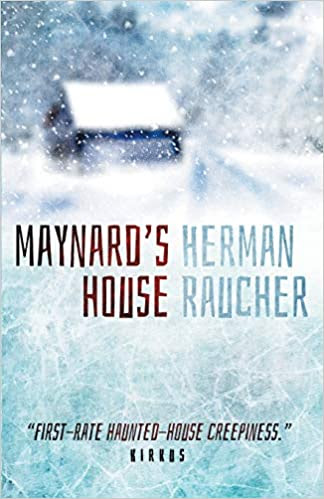
Dom Maynarda Herman Raucher

Dom Maynarda Herman Raucher

"Stare domy mają historie."

Od razu zaznaczę, że premiera tej powieści jest dopiero 26 maja, ja czytałam oryginał i twierdzę, że warto czekać.

Świetny klimat, początkowo przypominający mi postać Juda Crandall'a z Smętarza dla zwierzaków.

Zresztą, kto nie kocha Maine?

A-yuh!

Weteran wojenny Austin, dostaje testament spisany na kartce papieru, w którym jego towarzysz broni w Wietnamie, Maynard, przepisuje mu całe swoje domostwo, znajdujące się w odległych odmętach Maine. 

Odizolowaną posiadłość. A w pakiecie: Drzewo Wiedźmy. Diabelski Kamień. Rytuały. Wierzenia. Swoistego rodzaju kronikę mieszkańców domostwa, wyrytą na kawałku drewna.

A także dziwne stworzenia. Niebezpieczne niedźwiedzie. Dziwne jelenie. Ciekawskie wiewiórki. 

Naturę, która naturalna nie jest. 

Mroźna, zimna hermetyczna atmosfera, kojarząca mi się z powieścią Pavera Przepaść, jest początkowo pełna kojącego realizmu, który pomału i niepostrzeżenie zamienia się w złowrogą halucynogenną krainę snów, pełną niedopowiedzeń, niepokoju, niesamowitości, zjawisk nie z tego świata i dwuznaczności. Oraz podskórnego lęku, poczucia osaczenia, izolacji, ułudy. 

I nieoczywistego zakończenia.

Warto czekać.

MOJA OCENA: 8/10

PRZECZYTAJ FRAGMENT!

TU

***

Zima na przełomie 1972 i 1973 roku. Cierpiący na zespół stresu pourazowego, wycieńczony psychicznie i fizycznie weteran wojny wietnamskiej, Austin  Fletcher, dziedziczy po swoim zmarłym w walce przyjacielu Maynardzie dom, mieszczący się w lesie na głębokiej prowincji stanu Maine. Budynek jest bardzo stary i rzekomo nawiedzony – legenda głosi, że w czasach, gdy purynie urządzali procesy czarownic, na drzewie znajdującym się w okolicy posesji powieszono wiedźmę. Podobno drzewo to nie rzuca cienia…
    Austin nie wierzy w duchy, nawiedzenia i czarownice, jednak gdy potężna burza śnieżna odcina go od świata, w domu zaczyna dochodzić do zdarzeń, przy których piekło wojny w Wietnamie wydaje się być niewinną igraszką.


AUTOR


Powinniście odejść/ You should have left film/książka

Powinniście odejść/ You should have left film/książka

„Dobrze, że zaczynam tu nowy notatnik. Nowe otoczenie i nowe pomysły, nowy początek. Świeże powietrze."

Ten fragment pochodzi z pierwszego wpisu dziennika, prowadzonego przez narratora. Jest to zapis siedmiu dni, które on, jego żona i jego czteroletnia córka spędzili w wynajętym przez siebie domu w górach w Niemczech - domu, który  zdaje się przeczyć samym prawom fizyki. 

Film powstał na podstawie noweli niemieckiego pisarza, Daniela Kehlmanna: Du hättest gehen sollen, która jest niedostępna w Polsce. Pisana jest w formie pamiętnika/ notatnika, jest chaotyczna, ale przez to bardzo niepokojąca, schizorfeniczna wręcz!

Ten, kto lubi cienie i odbicia w lustrze, poruszające się niezależnie od ich właścicieli, nawiedzone domy, które domami nie są, cudownych mężów, którzy tak naprawdę przyprawiają o gęsią skórkę, atmosferę ciągłego zagrożenia, nawet w scenach z szerokimi uśmiechami na twarzach - ten będzie zachwycony.

Film ma parę rewelacyjnie creepy momentów, a Bacon cudnie wręcz sprawdza się w takich stonowanych i cichych rolach... no właśnie, kogo? (świetna postać z Opętania - kocham ten film!). Końcówka i cała puent mogłaby być lepsza, ale liczy się klimat!

Skrócik.

Theo Conroy to emerytowany bankier, żonaty z młodszą aktorką Susanną. Mają wspólną córkę o imieniu Ella. 

Postanawiają odpocząć i spędzić troszkę czasu razem - wynajmują w necie rezydencję, stojącą na odludziu walijskiej wsi. Mają tam zbliżyć się do siebie i cudownie spędzić czas.

Jasne.

Niedługo potem okazuje się, że w domu dzieje się coś dziwnego - czas mija niezwykle szybko, wszyscy mają koszmary, naprawdę straszne. Odkrywają również, że żadne z nich nie dokonało rezerwacji, myśląc, że to drugie to zrobiło...

Powoli ich sielanka zamienia się w prawdziwy koszmar, z którego nie ma ucieczki.

Pozostaje tylko spóźnione ostrzeżenie:  „Powinieneś był wyjść. Jest już za późno." 

Bo niektórzy ludzie nigdy nie wychodzą z tego domu...


Klimacik głównie kojarzący mi się z Domem z liści Danielewskiego, klaustrofobia, niepewność, szaleństwo i obłęd, anomalia i dezorientacja - zapraszają do odległej rezydencji, mieszczącej się w walijskiej wsi.

Opis kretyński, nie oddający atmosfery, za którą głównie jest moja ocena.

MOJA OCENA: 8/10

***

Bogaty bankier na emeryturze o niejasnej przeszłości wynajmuje walijski dom, do którego zabiera rodzinę. Zamiast jednak naprawiać związek z młodszą żoną, staje się coraz bardziej podejrzliwy i zazdrosny.


TRAILER


Creed Trisha Leaver Lindsay Currie

Creed Trisha Leaver Lindsay Currie

"Three days.
Three of us went in.
Three of us came out.

None of us even a shadow of who we once were."

Rewelacyjny klimat Silent Hill.

Trójka dzieciaków w drodze na weekendowy wypad i koncert, który Dee, główna bohaterka, zaplanowała w ramach prezentu dla swojego chłopaka, Luka. Jedzie z nimi też brat Luka, Mike. Jest wesoło, ciepło i miło.

Do czasu.

Środek lasu.
Boczna droga.
Brak paliwa.
Spacer do najbliższego miasteczka.
Purity Springs.

Wymarłego.
Pustego.
Koszmarnego.

Creepy.


A w tym creepy miasteczku creepy nastolatek.
I jego ojciec.

Elijah Hawkins. 

Ta trójka nie ma pojęcia, co ich czeka...

Szaleństwo. Obłęd. Kult. Patologia. Fanatyzm. 

Świetny klimat i materiał na rewelacyjną ekranizację.


MOJA OCENA: 7/10


PRZECZYTAJ FRAGMENT!

The car rolled to a stop on the side of the dirt road. I swore, frustrated that I’d left my jacket at home rather than cover up my new shirt. The rain we’d been driving through had quickly turned to ice, leaving the edges of the country road glossy and slick. It was cold and wet out there. And now I had to walk. Without a coat.
Luke yanked his earbuds out and tossed them onto the dashboard, then slammed the car into park. Not that it was going to go anywhere in drive. It had pretty much sputtered itself to a slow death.
“Where are we?” I asked, stepping out of the car. My feet slid out from under me, and I had to grab onto the mirror to keep myself from falling.
“No idea,” Luke said as he tapped the gas gauge to see if he could get it to move. “Probably somewhere between Watertown and Albany.”
“Way to narrow it down,” I said, popping the trunk in search of a sweatshirt or jacket. “That’s what … a three-hundred-plus mile range you’ve rattled off?
I turned to Luke’s brother, Mike, hoping he’d been paying better attention. “Where are we?”
Mike shrugged. “No clue, Dee. Sorry.”
I sighed. Not that I’d been watching the signs either. I’d spent the last hour with my head buried in my Spanish book, more worried about Monday’s test than directions.
I rifled through my bag in the trunk, looking for something warm to throw over my shirt, but it wasn’t like I’d packed for hiking. All I had was a pair of heeled boots, some jeans, a silky thing that couldn’t even pass for pajamas, and no one to blame but myself. It’d been over four years since I’d had to worry about having a just-in-case bag packed, and I’d gotten lazy. Or maybe too comfortable. Now I was looking at a case of frostbite as punishment.
I reached for Luke’s duffel bag and pulled out a pair of boxer shorts, a toothbrush, and a string of condoms. “Seriously? That’s what you packed?” I giggled as I shoved the condoms back into the bag, praying Mike hadn’t seen them. Luke’s choice of items was perfectly fine with me.
Luke smiled, his grin more devious than sorry. “It’s not like you gave me any idea where we were going or what you had planned. What else was I supposed to think?”
Nothing. He’d pretty much nailed it.
“Mind if I borrow this?” I asked as I pulled on one of Luke’s practice shirts. I gave it a quick sniff and decided the brown patches were actually dirt from the football field. Old dirt at that. It was warm, the fabric soft as if it had been recently washed, and it smelled 100 percent like him.
I snuggled deeper into the fabric. Something about this small part of him surrounding me made me feel safer and less on edge. “What time did we leave?”
“Two, maybe two thirty,” Mike responded. “Why?”
“No reason,” I said as I climbed back into the car and dug myself into Luke’s shoulder. It was a little past five, which meant we’d been on the road for about three hours. The concert was at seven in Albany, so I assumed we were about halfway there. But we’d stopped twice. Once because Mike had to pee, the second time because my stomach was growling louder than the engine. I figured about five minutes for the first stop, more for the second—the whole Twinkie vs. Ding Dong debate at the gas station and all—so that would put us about …
Who was I kidding? I had no clue where we were.
Leaning over Luke, I jammed the keys back into the ignition. I barely had enough time to get a look at the gas gauge before it died again, leaving us in frozen silence.
“How is it that we stopped at a convenience store two hours ago, ended up with a pound of Twinkies, and not a single one of us thought to get gas?”
Luke’s mouth turned upward into one of those sexy, lopsided grins that usually got him off the hook. “Don’t look at me. I’m map-guy, remember? Once we pulled off the highway, I had to focus on the directions. Gas … supplies … Twinkies, that was all you and Mike.”
He fumbled around on the floor of the car and pulled up the crinkled map. I-90 was jammed with traffic, so we’d pulled off about an hour ago, hoping to make better time. Unfortunately for me, map-guy and gas-guy couldn’t co-exist.
“You know how you asked me why colleges don’t allow hot plates in the dorm rooms?” Mike teased.
“Yeah, why?” Luke replied.
“Well, you’re the reason.”
I fought off a grin as I watched Luke think, his fingers tapping against his leg. Luke was brilliant, could solve an advanced calculus problem with very little effort. He had every play for the last three football games stored in his head and had scored a full academic ride to college. It was the simpler things like gas gauges and programing the DVR that threw him off. It was one of the thousands of details I loved about Luke. Somehow, it was both cute and irritating at the same time.
“If you’re saying that an unattended hot plate is a greater fire risk than, say, an iron or a candle, then you’re wrong. I gotta think that, statistically speaking—”
“Let it go,” I said, cutting Luke off. If we were betting on odds, then statistically speaking it’d be Mike and his bong that burned down the dorm.
Luke turned to me, his eyes softening as he took in my shivering state. “Sorry, Dee. I was listening to music and zoned out. I didn’t even think about gas.”
“It’s not your fault,” I groaned.
It wasn’t his fault; it was mine. You’d think after four years of living with the Hoopers, I would’ve learned to keep the gas tank full. They were old, old enough to be my grandparents, which meant each time their Buick left the driveway for the two-mile trek to bingo it came back with a full tank of gas. No exceptions. Mr. Hooper would scold me seven ways to Sunday if he knew we’d run out of gas, then he’d take Luke’s car to the station himself and fill it up. I’d be embarrassed and Luke would feign guilt, but neither of us would’ve complained.
The Hoopers had taken me in, a ward of the state with no home and no real family to speak of, and made me feel like one of their own. They didn’t need to, and God knows the miserable four hundred and fifty dollars a month the state paid them didn’t begin to cover my expenses, but they still let me stay. For that, I’d sit there quietly and let them rant about how irresponsible it was for us to get stuck on the side of the road because of something so stupid.
Mike leaned into the front seat and scanned the horizon. “It’s no biggie. We’ll call a tow truck.”
I fished my cell phone out of my pocket and stared at the screen. No signal. I don’t know what I was expecting; there hadn’t been a signal since we’d pulled off the highway.
It was getting dark, there wasn’t a person in sight, and we had no clue where we were. Great, now all we needed was a skinny, pale girl in a bikini, a big guy in a mask sporting a chain saw, and a sheriff turned zombie and we had the makings for a perfect horror movie.
“No signal,” I said, holding up my phone for Mike to see. “Try yours.”
“Nothing,” they both said in unison.
Wiping the thin layer of fog from the window, I looked out into the vanishing daylight. Except for the three-foot-high stalks of dying crops shaking gently in the wind, I saw nothing. Heard nothing.
“We’re in the middle of Nowhere, New York, with a good fifty-mile walk to the last gas station we passed,” I said, inching closer to Luke. “We need a plan, or we’re going to miss … ”
I trailed off, not wanting to ruin Luke’s surprise. He had no clue where we were going. No idea I’d been scraping money together for the better part of five months to get him those concert tickets.
“Miss what?” Luke asked, pulling me closer. He dropped a line of kisses on my neck, his breath heavy and sweet in my ear. He was taunting me, trying to get me to spill my secret.
“Nothing, but we need to get back on the road,” I said, unwinding myself from his grip.
Luke eased back, dropping that happy-go-lucky attitude of his. It’d taken him a long time to get to this point with me, to recognize the fear in my voice and understand that I wasn’t the defiant, hardened foster kid everybody assumed I was.
“Relax, Dee. It’s gonna be fine.” Luke pulled his jersey around me tighter, his gaze lingering on the number three—his number—on my chest, and a look of appreciation lit up his face. “Looks better on you than me.”
It actually looked best rolled up in a ball at the foot of his bed next to my shoes and jeans, but I didn’t say that. Not with Mike listening from the back seat.
“Stay here,” Luke said as he slipped on his gloves. “There’s got to be a town nearby. Mike and I will go find some gas."
I stared at him, my mind racing through a thousand juvenile scenarios. Each of them ended up with me hacked to pieces by the local crazy man. “Yeah … no. I’m going with you.”
I cocked my head, daring Luke to challenge me. He smiled, shrugged out of his jacket, and wrapped it around my shoulders. His fingers wound tightly into mine and 
I sighed, feeling a momentary sense of peace. Luke would walk through hell for me, and, given the walls I’d made him tear down when we first started dating, I had no reason to doubt him now.
The hazy possibility of a town shone through the sleet, the lights barely visible from where we sat. Even if Luke was right and we were close to another gas station, I doubted we’d make it there before we froze to death.
I forced myself to open my door again, the wind cutting through me like a steel blade. Luke was already rummaging through a black bag in the trunk. He found a flashlight and flicked it on, the narrow beam illuminating the side of the road.
“Let’s go,” he said. “The sooner we find gas, the sooner we can get back on the road.”
I looked at Luke, my gaze landing on what appeared to be a tire iron lodged in his left hand. “You bringing that?” I asked, suddenly wishing we’d decided to sit in the car, blow off the concert, and flag down the next person who drove by.
“Sure am,” Luke said.
I shook my head and fought the urge to laugh. There was zero chance of someone helping us now. I mean, who in their right mind was going to stop for three kids, especially one carrying a tire iron?
I glanced back toward the car, unnerved to see that it was quickly fading away behind us. We’d barely walked a quarter-mile, and yet our car was already veiled in ice. I put my hand in Luke’s, praying that the town was closer than it looked.

The town definitely wasn’t as close as it looked. My feet hurt and my fingers were numb by the time we hit the outskirts. I probably would’ve sat down right there on the side of the road in a pile of muddy slush had it not been for the annoying siren echoing through the silence.
“What is that?” I asked, my head pounding in time with the two-beat wail.
“Sirens,” Mike replied.
“Yeah, thanks, I got that,” I muttered, then turned to Luke. “I meant, why are they going off?”
Luke shrugged and scanned the area, same as me, in search of a mushroom cloud, a tornado, a wall of water … anything that would explain why the emergency sirens had been set off. Except for a bank of gray clouds hovering in the distance, the horizon was clear. No sign of a deadly storm, a world-ending apocalypse, or a zombie attack. Absolutely nothing.
Not only that, but as far as I could tell, there was nobody around to warn. What looked like cars were up ahead, but they were stationary—no blaring horns or mufflers. Had it not been for the two expensive-looking tractors and a set of fresh tire tracks lining the road, I would’ve assumed the town was abandoned.
“Don’t worry,” Luke said, squeezing my hand tighter. “We’ll hit the first gas station we see, grab some gas, and get back on the road.” He leaned in and ran his hand across the back of my neck, drawing me closer. “Maybe you want to tell me what the big surprise is now? I may find that gas a little faster if I had something to look forward to and all.”
“Not gonna happen,” I said and pushed him away. He turned to Mike, no doubt planning to bait his younger brother for information. I held my hand up, warning Mike to keep his mouth shut. “Don’t you even think about it!”
Mike slapped Luke on the shoulder, bracing himself for the punch that would undoubtedly follow. “Sorry, but the boss says no.”
Luke’s chuckle felt forced, like he was trying to keep the conversation light despite the fact that the sirens were getting louder by the minute. “Yeah? And when did you start taking your orders from her?”
Mike grinned, that stupid, mischievous twinkle marring his eyes. “I don’t, but we both know you do. Walls are thin back home. Really thin.”
“Shut up!” I shouted, picking up my pace. There were some things I’d rather not think about, and Mike listening to me and Luke … yeah, that was one of them.
The first shadow of a building appeared, the sleet making its brick exterior shine with a coldness that crept into my soul. I stopped at the base of the steps and stared up at the words engraved above the door: Purity Springs Savings and Trust. Next to the bank was a grocery store and across the street was a dry cleaner, a small café, and what appeared to be a string of white-clapboard community buildings connected to a chapel.
I stopped in the middle of the street and tugged Luke to a halt beside me. Other than the sirens blaring in my ears, it was still. Dead. No howling dogs, no crying children, no cars speeding away from impending danger.
I shuddered. The vacant street, the splatter of slush against concrete, the ancient-looking buildings all hovered around us. It was seriously creepy, and I fumbled in my purse for the tiny canister of mace I always carried. Not that there was anybody to spray. The place was a ghost town.
“Where is everybody?” I wondered out loud.
“No clue,” Luke yelled, competing with the sirens. “Not sure I care, either,” he added, pointing down the street.
I had to squint in order to make out the faint sign about a quarter-mile up. It wasn’t the words, but rather the familiar-
shaped rectangles jutting up from the ground that gave it away. “Gas station,” I squealed and took off running.
The sun was about to set, the orange glow painting the streets in a dim light. For as deathly silent as this place was, I could’ve sworn I saw shadows. They were nothing more than flashes of black darting behind the buildings, but they were there. My rational mind knew it was probably just the last bit of sunlight changing positions. But logical thinking was no match for my imagination, and I found myself squeezing the small canister of mace, my hand sweating as I melded it with my palm.
Mr. Hooper had given it to me the week I came to live with them. I was barely thirteen and trusted nobody, including myself. I hadn’t seen my parents for over a year at that point. The state had finally taken me away from them permanently when my father’s interest in me went from a simple punching bag to something else. I’d been bounced between three different foster homes and kicked out of two residential programs when the Hoopers finally agreed to give me “one last shot.” That last shot came with a lot of rules and weekly, court-mandated counseling, but eventually the Hoopers wore me down and got me talking when all I wanted to do was hide.
Mr. Hooper tucked the mace into my hand the day I started school, told me the first step to getting beyond my past was to take control of my present. I took it because having that small weapon made me feel less like a victim and more like a girl you didn’t want to mess with. Now the mace came with me everywhere.
Turning back, I scanned the street for Mike. He may have been the third wheel on this trip, but he was Luke’s brother, and at the end of the day, he was always good for a few laughs. That and he had our concert tickets in his wallet.
“You see Mike anywhere?” I asked.
Luke circled his hand in the direction of everything and nothing. “Yeah, he’s fine. He’s checking the place out, same as us.”
I sighed and searched the empty street once more. We had to stay together; it was stupid to be splitting up like this.
“Relax, Dee. There’s no on here,” Luke said. “They probably evacuated when the sirens went off. I’m sure it’s nothing more than a false alarm.”
I shrugged and kept going, wanting to get out of this place as soon as possible. This town, with its eerie silence and deserted streets, made me feel weak, like I was being watched … cornered. And I hated that feeling.
Sensing my unease, Luke tugged me to a stop and forced me to look at him. “I’m not gonna let anything happen to you.”
I smiled and tried to look reassured. I believed him, or at least most of me did. The rest was hanging onto seventeen years’ worth of crap.
He ran the pad of his thumb over my cheek, the familiar look of determination flickering in his eyes. “Dee, you believe me, right?”
“Yeah, but Mike … ” I trailed off. My throat was already getting sore. If I wasn’t careful, competing with the sirens would eventually make me both deaf and mute.
The darkened street stretched ahead of us and I exhaled, taking comfort in the sight of Mike’s figure in the window of the brightly lit gas station. The parking lot was full, several cars sitting side-by-side. Empty. Luke tapped on the open door of a standard-issue blue Ford, his mind no doubt traveling the same unsettling path as mine. He and I had lived in the same town for almost four years now, and we knew full-well that when there was an emergency, not everyone listened. There were always a few idiots who stayed behind, believing they were stronger and smarter and capable of outsmarting Mother Nature. Not here. Apparently, everybody is this town was a law-abiding citizen.
Luke placed his hand on my shoulder. He was probably just trying to get my attention, but it scared the crap out of me. I screamed out a four-lettered reaction and jerked away.
“Down, girl,” Luke said with a smirk.
He motioned toward the gas station’s windows, where Mike was waving us in. I laughed nervously as the bell above the doorway jingled, signaling our entrance. I half expected a grease-covered kid to come and see what we wanted. Instead, I was met by nothing but empty aisles.
“Oh thank God,” I moaned, uncovering my ears as 
the door swung shut, dampening the high-pitched wail of the sirens.
“No phone, but I found a gas can,” Mike said as he proudly waved the shiny red container in the air. “It’s empty though.”
“No problem. We’ll fill it up,” Luke said. “I’ll leave a twenty on the counter to cover it.”
“It’s not that easy,” Mike muttered, banging on the tiny silver bell perched on the counter. Nobody answered his call, but he continued hammering away at the bell anyway. “Sure, there’s gas, but we can’t get to it without someone working here.”
Luke peered down the hall. “Hello? Ah, we need some gas. Anyone here?” Turning back, he shrugged and did another quick sweep of the counter. “No phone. No keys to the cars parked in the lot. No gas attendant. This place is completely empty. I say we take what we need and go.”
[...]

***
Three went in. Three came out. None even a shadow of who they once were.


When their car breaks down, Dee, her boyfriend Luke, and his brother Mike walk through a winter storm to take refuge in a nearby town called Purity Springs. When they arrive, the emergency sirens are blaring and the small farming town seems abandoned. With no other shelter, they spend the night in an empty house.

But they soon discover that not everything in Purity Springs is as it seems. When the town's inhabitants suddenly appear the next morning, Dee, Luke, and Mike find themselves at the mercy of the charismatic leader, Elijah Hawkins, who plans to make Dee his new wife. Elijah's son, Joseph, offers to help them escape . . . but the price of his help may be more than Dee and her friends can bear..


AUTOR


Autor: Sabina Bauman - klik zdjęcie
Copyright © 2014 Mniej niż 0 - Mini Recenzje , Blogger